The Clear Bottle Penalty: Six Sub-£20 Vitamin C Serums Through Four Weeks of British Grey
Vitamin C is sold as the brightening step — the one that lifts dull skin and makes you look like you've had more sleep than you have. In a British November, that promise gets tested by about four hours of weak daylight, a radiator that clicks on at 6pm and a bathroom that fogs up every time someone has a shower. So I bought six serums under £20, gave them the sort of storage real people actually have, and watched what happened over four weeks.
This wasn't a laboratory trial. I'm not a cosmetic chemist, and I didn't have a spectrophotometer in the airing cupboard. It was a shelf trial: colour, smell, texture, packaging practicality and whether my skin looked any less grey by 13 November 2026. Take it as a consumer diary, not a clinical paper.
The six, and where they lived
I'm labelling them A to F because the point isn't to pile on individual brands — it's to show how formula and packaging behave in ordinary homes.
- Serum A — £7.99 supermarket own-brand, 30ml, clear glass dropper. Thin, watery, faint citrus smell.
- Serum B — £12.99 pharmacy own-brand, 30ml, opaque pump. Light lotion texture, almost no scent.
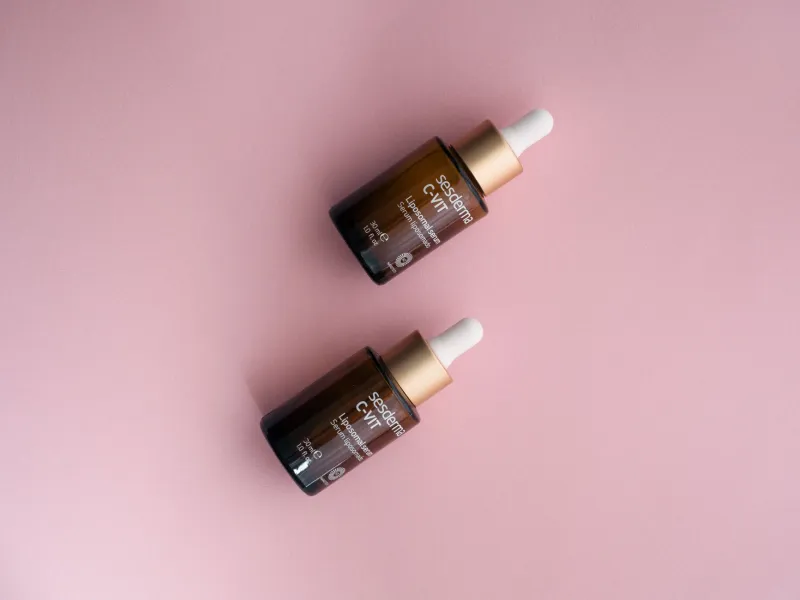
- Serum C — £16.50 high-street brand, 15ml, amber glass dropper. Slightly tacky, warm citrus scent.
- Serum D — £18.00 online-only brand, 30ml, airless pump. Gel-cream, fragrance-free.
- Serum E — £9.50 discount retailer, 50ml, clear plastic pump. Very fluid, strong orange smell.
- Serum F — £19.99 beauty-hall brand, 30ml, frosted glass dropper. Silky serum, mild scent.
I split them across three spots: the bathroom shelf beside the shower (warm, steamy, worst-case), the sill of a north-facing window (cold light all day) and the top of a wardrobe in the spare room (cool, dark, boring). Two serums per spot. I used one at a time for four mornings in a row, cycling through all six twice across the month, so each got a fair run on my face while the original bottle stayed put.
What oxidation actually looked like
The first sign wasn't a dramatic colour change. It was a shift in tone. Serum A went from pale straw to a deeper yellow by day 12 on the bathroom shelf. Serum E, in the window, followed a few days later — still usable-looking, but noticeably more orange at the dropper tip than in the bottle. Serum F, the frosted one, was the surprise: the glass looked smart, but by week three the liquid had darkened to a tea-stain shade that I didn't want near my face.
The opaque pump and airless pump told a quieter story. Serum B and Serum D looked much the same at the end as at the start. Serum C, in amber glass, held up better than the clear bottles but not perfectly; by week four there was a faint amber tint that hadn't been there in October. That's the trade-off with dropper bottles: amber glass slows light damage, but every time you unscrew the cap you let in air.
Smell was a useful warning. The clear-bottle serums developed a sharper, flatter citrus note — not off enough to bin immediately, but enough to make me use them faster. The opaque ones stayed neutral.
Packaging that helped, packaging that hindered
A pump isn't automatically better, but in this test it usually was. Serum B's opaque pump was easy to dose and kept the formula away from light and fingers. Serum D's airless pump was the most fuss-free: no drips, no exposed liquid, no temptation to leave the cap off while I answered the door.
Droppers are lovely to use and terrible for air exposure. The amber glass one was the best of the dropper bunch, but I still wouldn't buy a clear glass dropper serum again for winter storage unless I planned to keep it in a cupboard and use it within six weeks. The frosted bottle looked the most expensive and behaved the worst — a reminder that packaging is often designed for shelf appeal, not shelf life.
The 50ml clear plastic pump was the value option, but it was also the one I trusted least by the end. A big bottle of a fragile formula is only a bargain if you can get through it before it turns.
Did anything brighten?
Honestly? A little, and not in a dramatic way. My skin is combination, with some post-blemish marks on my cheeks and a general end-of-autumn dullness. After four weeks, the serums in opaque packaging — B and D — left my skin looking slightly more even and less tired. The effect was the sort of thing you notice in the bathroom mirror at 7am, not in a photo.
The clear-bottle serums did less, and I suspect the visible darkening was part of the reason. A formula that has spent two weeks in a steamy bathroom is not giving you the same thing it did on day one. The amber dropper was somewhere in the middle: pleasant, mildly brightening, but I'd want to finish it within a month.
None of them replaced sunscreen. Vitamin C and SPF are not either/or, and a grey British winter still has enough UVA around to make daily sun protection worthwhile. If you're buying vitamin C for glow and skipping SPF, you're bringing a torch to a floodlight party.
The verdict
Worth buying: the opaque pump (B) and the airless pump (D). They're not the cheapest per millilitre, but they protected the formula well enough that I'd repurchase for winter. The amber dropper (C) is a reasonable buy if you'll use it steadily and store it in a cupboard, not on a windowsill.
Buy only with a plan: the supermarket clear dropper (A) and the big clear plastic pump (E). If you can keep them in the dark and finish them within a few weeks, they're fine for the money. If they're going to sit on a steamy shelf, don't bother.
Skip: the frosted glass dropper (F). It was the prettiest bottle and the least reliable formula after four weeks. Pretty packaging is not a preservation strategy.
My broader takeaway: in a British winter, a budget vitamin C serum is more of a maintenance product than a miracle brightener. Buy the packaging that protects the formula, store it away from steam and light, and judge it by how it behaves in week three — not by how it looks on the shelf in week one.